
A Horticultural Organisation
Built Through Practice.
AK Flora is a commercial horticulture organisation shaped by practical field experience, nursery discipline, crop observation, and an understanding of the realities of commercial plant production.
AK Flora did not emerge from a single idea or a finished formula. It has been shaped through the realities of horticulture—learning how plants respond, understanding markets, managing crops, working through challenges, adapting to changing conditions, and continuing to improve.
Commercial horticulture demands both biological understanding and practical discipline. A plant does not grow according to a business plan; it responds to genetics, environment, nutrition, water, light, temperature, plant health, management, and time.
Understanding this relationship between plant biology and practical production is central to how we see our work.
MORE THAN PRODUCTION
We do not define AK Flora only by the crops we cultivate. We define it by how we approach cultivation. Good plants begin with good planting material. Good crops begin with good observation. Good decisions begin with understanding. Good systems begin with documentation. And strong partnerships begin with trust.
From Practical Experience to Institutional Thinking
The story of AK Flora is best understood not simply as a sequence of dates, but as a gradual expansion of horticultural capability.
Learning Through Cultivation
The foundation of horticulture is practical experience. Working with crops teaches lessons that cannot always be learned from theory alone—how plants respond to changing environments, how problems develop, how timing affects quality, and how small management decisions influence an entire crop.
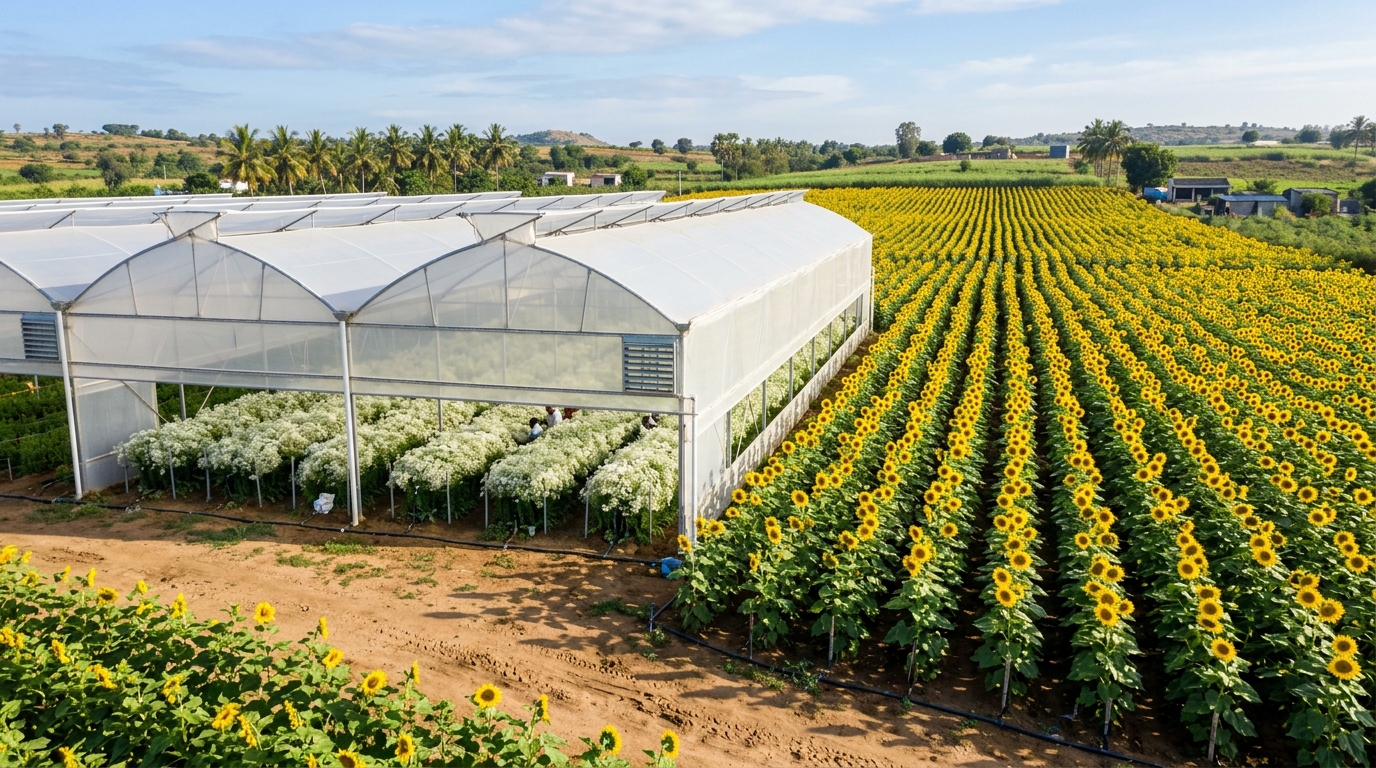
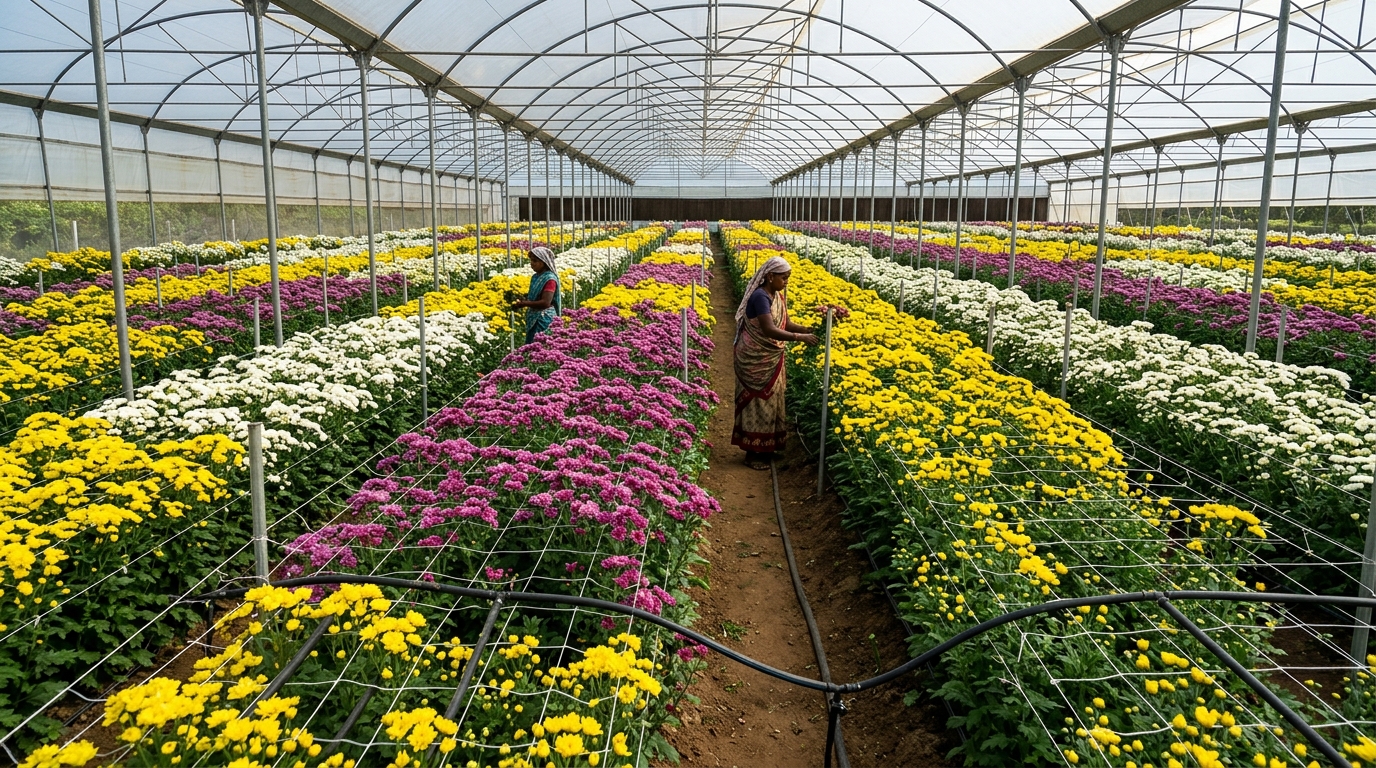
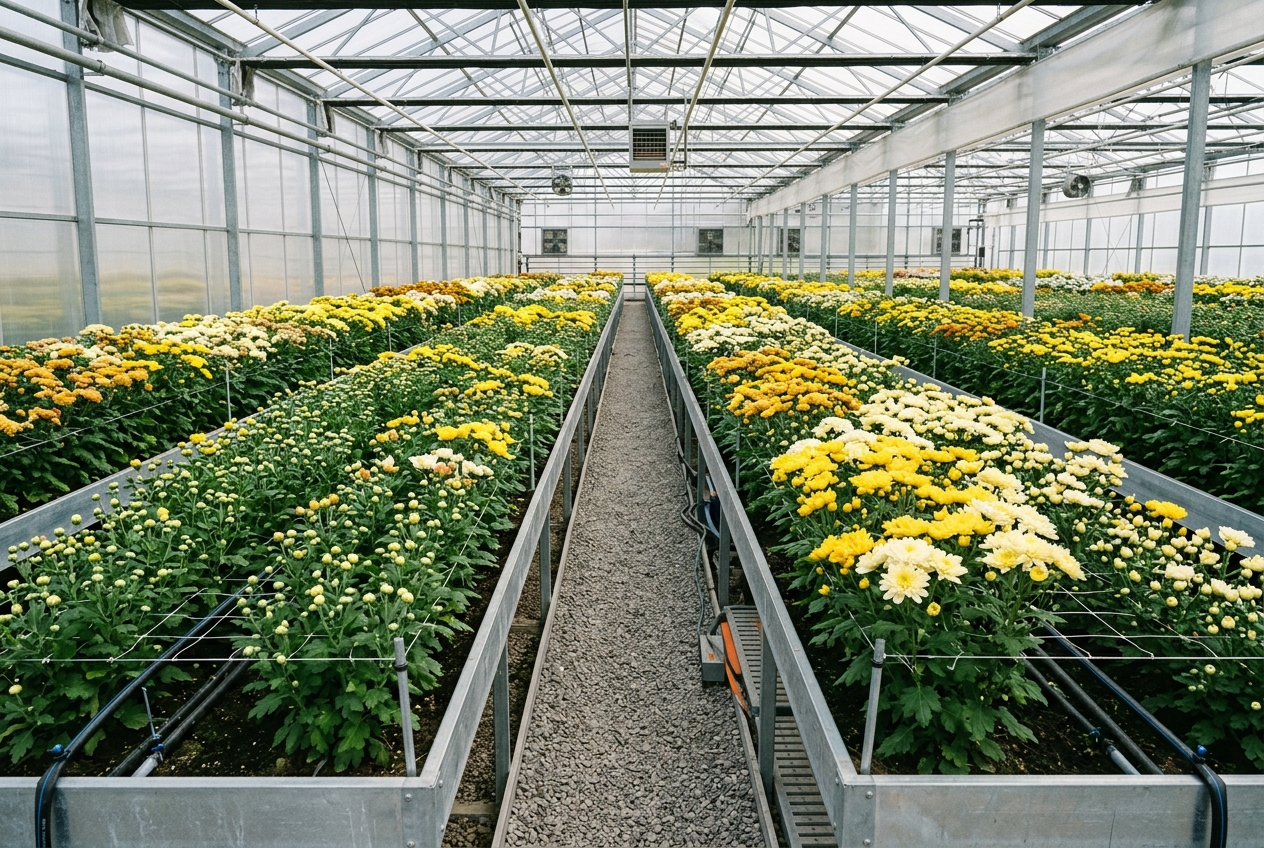
Protected Cultivation & Floriculture
Protected cultivation created an environment in which crop management could become more deliberate. Chrysanthemum production required attention to propagation, fertigation, environmental management, photoperiod, and quality.
“Consistency is not achieved at harvest. It is built throughout the crop cycle.”
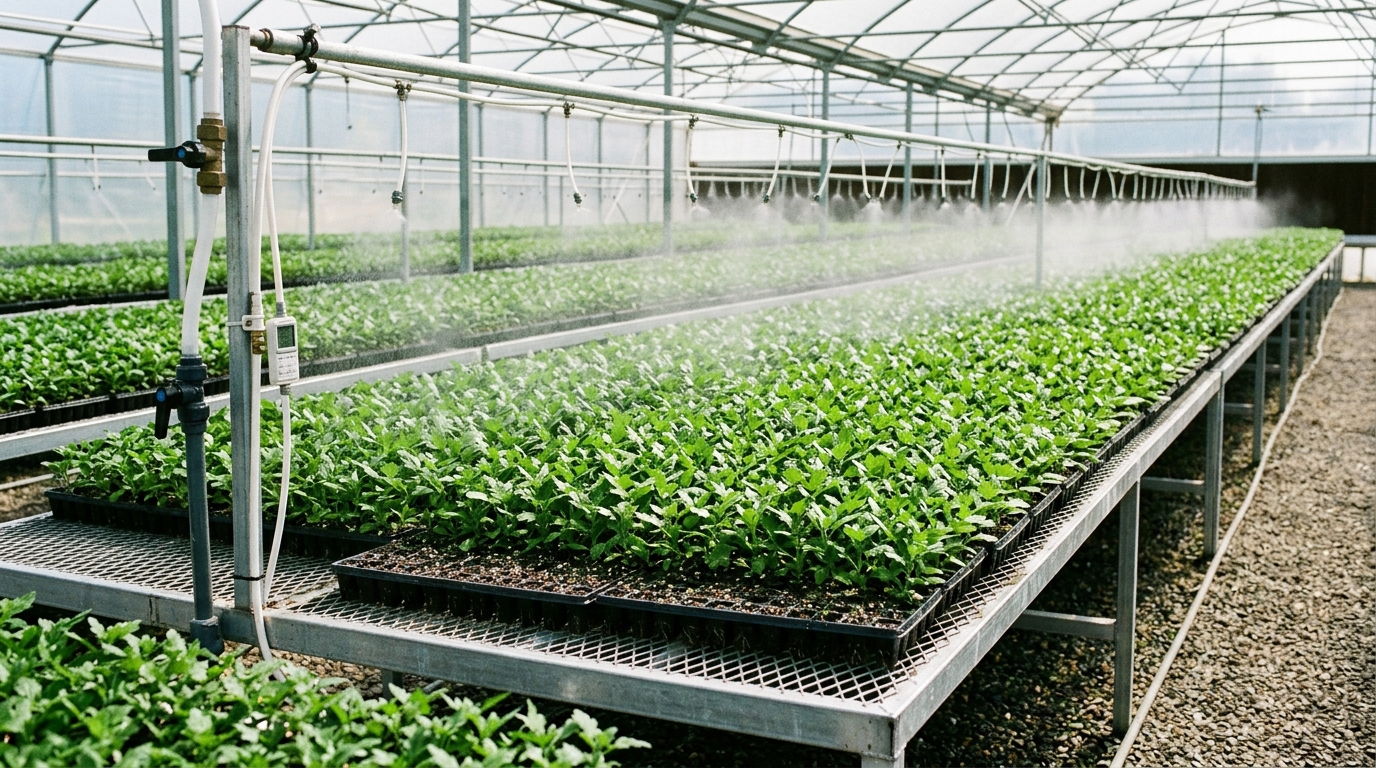
Nursery & Propagation Discipline
The nursery is where the future crop begins. Mother plant health, cutting quality, rooting environment, substrate, moisture, nutrition, and hardening all influence what happens later. Propagation discipline became a foundation of quality.
Expanding Into Ornamental Horticulture
Ornamental foliage, indoor plants, outdoor plants, landscape material, and container plants created new opportunities while requiring distinct approaches to propagation, acclimatization, nutrition, light, and presentation.
From Experience to Systems
As operations became more complex, experience alone could not carry everything. Knowledge must be recorded, observations organized, processes made repeatable, and data made useful through digital systems.
PRACTICAL
We value knowledge that can survive contact with a real crop. Theory is only useful when it translates into dependable field results.
OBSERVATIONAL
We pay attention to what plants are actually showing us. Every leaf change, root growth pattern, and environmental shift is information.
DISCIPLINED
We believe consistency comes from systems and careful execution. Quality is not an accident; it is a repeated habit.
LEARNING-ORIENTED
Every season, crop, problem, and experiment can teach us something. We capture lessons to improve future practice.
RESPONSIBLE
We believe commercial growth should be built on quality, transparency, and relationships that stand the test of time.
Led by People Who Have Lived the Journey
Three perspectives. One institution.
Niranjan Agarwal
“Persistence Built the Foundation.”
I started my journey in horticulture with the willingness to learn, adapt, and keep moving even when the answers were not always clear. Building a horticultural business is not easy; there are good seasons and difficult seasons. Experience has taught me that persistence matters as much as knowledge. What AK Flora is today has been shaped by those experiences—the challenges faced, lessons learned, and the decision to continue building.
READ NIRANJAN'S STORY →
Deepak Agarwal
“Continuity Requires Learning.”
I see my responsibility as carrying forward what has been built and finding ways to make it stronger. Every crop behaves differently, every season brings new conditions, and every improvement begins with the willingness to observe and change. My focus is on turning experience into disciplined execution—improving cultivation, strengthening systems, and continuing to move AK Flora forward. Growth is about becoming better, more consistent, and more capable.
READ DEEPAK'S STORY →
Preeti Agarwal
“Flowers Connect Horticulture With People.”
Flowers have a unique place in horticulture because they connect production with emotion, design, markets, and people. My role is closely connected to understanding those connections—recognising opportunities, exploring new varieties, supporting market development, and helping the organisation remain connected to changing customer needs. Future success lies in combining good horticulture with good market understanding.
READ PREETI'S STORY →“Persistence gives us our foundation. Execution gives us momentum. Market understanding gives us direction.”
What Experience Has Taught Us
Plants Cannot Be Rushed. Only Supported.
Growth follows its own biological timeline. Our responsibility is to create the optimal conditions in which that growth can happen well.
Observation Comes Before Intervention.
A symptom is information. A change in leaf colour, root vigor, moisture, or branching tells us something about the system. The better we observe, the better we respond.
The Root System Is Part of the Future.
A plant may look healthy above the surface while its most important story is developing below it. Good horticulture pays attention to what cannot always be seen.
Every Crop Leaves Behind Knowledge.
A successful crop gives us confidence. A failed crop gives us questions. Both are valuable when they are properly understood and documented.
Building Beyond Production
“We Are Still Learning. AK Flora Is a Journey, Not a Finished Product.”