The Constitution of AK Flora
“Principles guide decisions. Decisions shape actions. Actions build institutions.”
Why This Constitution Exists
AK Flora is built around a simple understanding:
Commercial horticulture is not only about growing plants. It is about understanding plants, managing systems, developing people, protecting quality, learning from experience, and building relationships that can last.
Our work brings together practical horticulture, nursery propagation, protected cultivation, floriculture, ornamental plants, plant care, commercial supply, and continuous field learning.
As the work grows across crops, farms, teams, customers, and partnerships, experience alone is not enough. We need principles that remain consistent.
This Constitution defines the principles by which AK Flora seeks to operate—how we think about plants, production, quality, knowledge, people, partnerships, and the future of horticulture.
“A business can grow through activity. An institution grows through standards.”
This document exists to make those standards visible.
Note to the Reader
An Evolving Framework
This Constitution is not intended to be a static corporate statement. Horticulture is a living discipline.
- • Plants respond to environment
- • Markets change
- • Production systems improve
- • New knowledge emerges
- • Mistakes reveal weaknesses
- • Experience changes understanding
Therefore, AK Flora's institutional principles should remain stable in purpose but capable of becoming stronger through learning.
The AK Flora Identity
We Are Horticulturists Before We Are Suppliers.
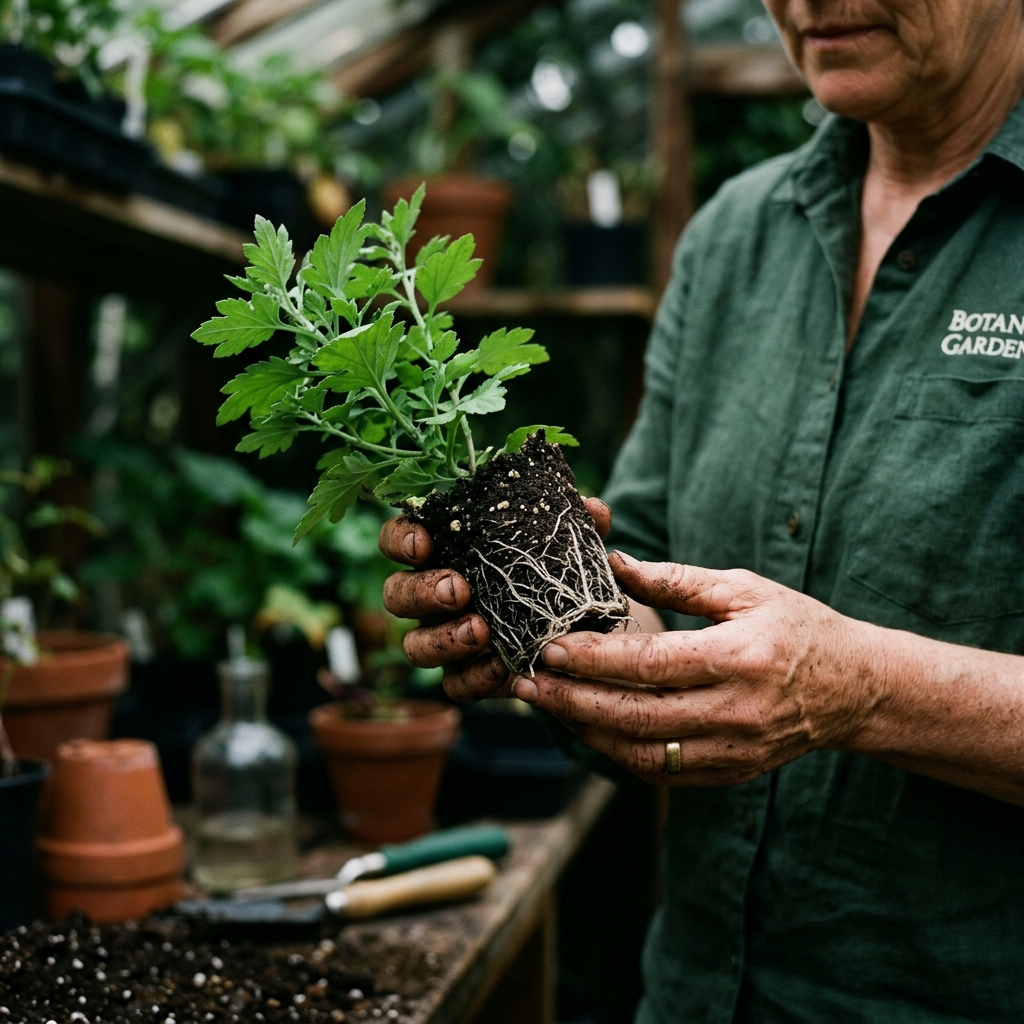
AK Flora approaches horticulture from the perspective of the plant. Before asking: “What can we sell?” we should ask: “What does the plant require?”
That question leads us toward better propagation, better cultivation, better plant health, better quality, better handling, and ultimately better relationships with the people who depend on our work.
“We seek to understand growth before we seek to maximize it.”
The Six Constitutional Pillars
Plant Understanding
We begin with the plant. Its growth habit, propagation behaviour, root environment, nutritional requirements, environmental response, health, and commercial purpose must be understood before management decisions are made.
Cultivation Discipline
Good horticulture requires consistency. Irrigation, fertigation, crop monitoring, pest and disease management, environmental control, nursery practices, harvesting, and handling must be approached systematically rather than casually.
Scientific & Practical Knowledge
Scientific knowledge gives us principles. Field experience gives those principles context. AK Flora seeks to combine both. We observe, test, document, compare, learn, and improve.
Quality & Consistency
Quality should not depend entirely on individual effort or luck. It should be built into the production process. From planting material to crop management, harvest, grading, handling, and supply, each stage contributes to the final result.
Responsible Partnerships
A commercial relationship is more than a transaction. Growers, buyers, suppliers, employees, horticulturists, nursery partners, and other stakeholders should be treated with clarity, respect, honesty, and professional responsibility. Long-term trust is more valuable than short-term gain.
Continuous Improvement
Every crop cycle teaches something. A successful result should be understood. A failure should be investigated. An unexpected response should be recorded. A better method should be tested. Knowledge should never stop evolving.
Our Core Beliefs
“Quality begins long before the product reaches the market.”
It begins with planting material, cultivation conditions, plant health, crop management, harvesting, and handling.
“The field is one of our most important classrooms.”
Books and research are essential. But horticultural understanding becomes stronger when tested against real plants.
“What we learn should not disappear when a crop cycle ends.”
Observations, successful practices, mistakes, problems, and solutions should become institutional knowledge.
“Long-term trust is more valuable than short-term volume.”
We want relationships built on reliability, communication, quality, and mutual respect.
Articles of Governance (I – VII)
Click any article below to inspect complete operational clauses
ARTICLE I — PLANT-FIRST DECISION MAKING
ARTICLE II — DISCIPLINED CULTIVATION
ARTICLE III — NURSERY INTEGRITY
ARTICLE IV — OBSERVATION & RECORD
ARTICLE V — TRANSPARENT COMMERCIAL PRACTICE
ARTICLE VI — KNOWLEDGE PRESERVATION
ARTICLE VII — RESPONSIBILITY
The AK Flora Quality Chain
“Quality is not one checkpoint. It is the result of the entire chain.”
Knowledge as an Institutional Asset
AK Flora's Knowledge Centre is an institutional memory system built from seven core streams:
Technology & Growth
OUR VIEW OF TECHNOLOGY
Technology should support horticulture—not replace horticultural understanding. Data, digital systems, automation, crop records, sensors, and analytical tools help us observe accurately. But final responsibility remains human.
“Technology can increase our ability to observe. Horticultural understanding determines what we do with what we observe.”
OUR VIEW OF GROWTH
Growth is not measured only by acreage or volume. Institutional growth also means:
“Every plant carrying the AK Flora name represents a responsibility—to understand it, cultivate it carefully, handle it responsibly, and stand behind the work that produced it.”
PLANT • PRACTICE • KNOWLEDGE • QUALITY • RESPONSIBILITY • TRUST
Building the Future of Commercial Floriculture
AK Flora's future will be built one plant, one crop, one observation, one relationship, and one improvement at a time.
Living with Flowers. Growing with Purpose.